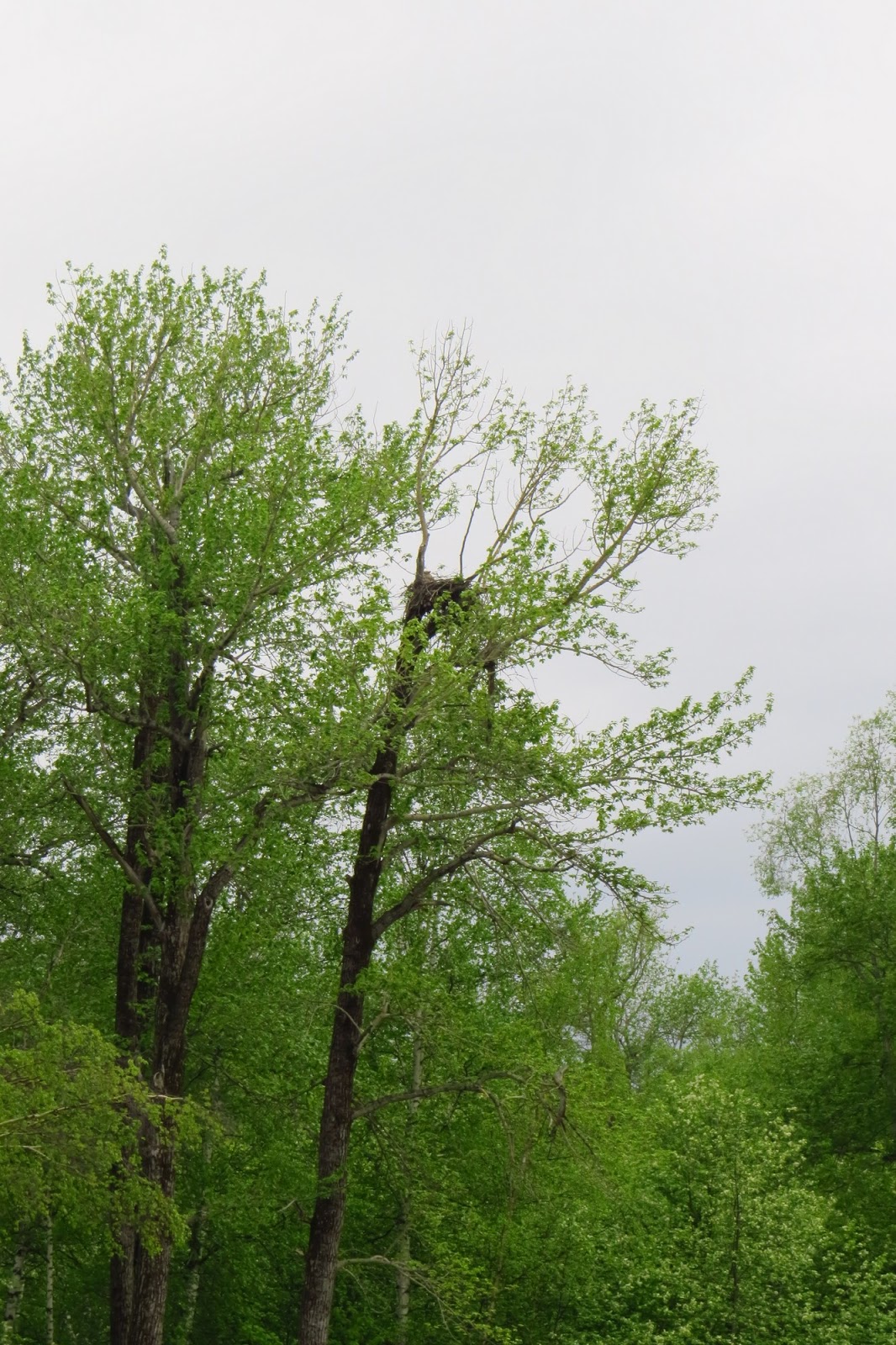
This is a short introduction to Magadan and the work we have been doing there on Steller's Sea Eagle. It will hopefully set the scene for the blog posts that Eugene and Irina will be making during the field season.
Magadan is the administrative capital of the region. It is a port city on the Russian mainland bordering the Okhotsk Sea, directly north of Sakhlin Island and Japan. It is about 800 km north of Sakhalin and about 1700 km north of Hokkaido, Japan. Magadan was, and still is, a center for gold mining and fishing activities, and was a transit center of gulags. There is a memorial just outside of town commemorating the many lives lost in the gulags.
 |
| Central Magadan |
Magadan is also where the headquarters of the Magadan State Reserve are located, the Magadan Zapovednik. The reserve encompasses three geographically separate protected areas, which include coastal and riverine habitats. The
zapovednik system in Russia was established to protect representative habitats, ecosystems and cultural heritage sites across the country, be the basis for historical research, and protect "pristine" places against which change in other places could be measured. Apart from the eagles, the Magadan Zapovednik protects pristine areas that are important spawning grounds for salmon, sea bird colonies and
Steller's sea lion breeding areas.
Our work has concentrated on the Kava-Chelomdze segment of the reserve, an area drained by the Kava, Chelomdze and Tauy rivers about 100 km west of Magadan town, but when funding and weather allow we also work along the coast, islands and large rivers from south of Magadan (the Koni Peninsula) to Okhotsk. In the Kava-Chelomdze part of the reserve, in any given year, we might expect to have access to about 15 Steller's eagle nests, and if we are able to survey the whole and rivers from the Koni Peninsula to Okhost we might visit nearly 120 eagle breeding territories.
Okhotsk is the place from which
Vitus Bering sailed to explore the north Pacific Sea that would eventually bear his name. The ship doctor and naturalist was
Georg Wilhelm Steller, the namesake of a number of species, one which was never been seen by others (
Steller's sea monkey), and one which are extinct (
Steller's sea cow).
The Kava and Chelomdze rivers meet to form the Tauy River. The Kava is a relatively slow moving river that runs parallel to the coastline, and the Chelomdze is a much faster running river that flows from a more northerly direction. Salmon spawn in both rivers, and Steller's sea eagles nest in large trees (Mostly larch and poplar) along the banks. We travel these rivers by boat when we survey the eagles. The Kava is relatively easily navigated, but spring floods and log jams mean that every year on the Chelomdze is a new adventure, and the floods determine how far upstream we can get with our 3 m long rubber boat and 40 HP motor. The changing shallows also consume many of our propellers in some years. In some years we have been able to survey the Kava-Chelomdze system by using microlight aircraft, that give us access to areas blocked by logs and shallow water that prevent access by boat.
 In the early morning we set out to the Kava River. Thanks to the June surveys by Irina, we knew about only one productive nest along the river. Upon arrival we found no visible presence of the chick, so we had to fly our quadrocopter. The flight was a bit tricky since the launchpad was located in a thick underbrush. Nevertheless the result was: yes there was a chick. Somewhat younger than we expected, but nevertheless we have a chick!.